IGNITE 48 · CHINA TOUR · 中国巡回
China Tour · 48-Hour Youth AI Hackathon
Shenzhen in September, Hangzhou in October and Chengdu in October, with more cities to come — not another AI camp, but a real step out into the world
One line for parents
This isn't about learning one AI tool or building a uniform template project. It's a real-world project trial for youth aged 8–18: see a problem, find teammates, build an AI Demo, present on stage, and grow through feedback from peers and real judges.
FAMILY BUILDERS · UPGRADED
Shenzhen, Hangzhou and Chengdu, fully upgradedA 48-Hour Family AI Hackathon
One family, two independent Builders
Shenzhen Sep 26–27 · Shenzhen Bay Eco-Technology Park; Hangzhou Oct 5–6 · Xixi Legu Creative Park, Xihu District, Hangzhou; Chengdu Oct 24–25 · 2 days offline · no all-nighters
This time it's not just the kids taking the stage — parents can join as official Builders too: alongside their child, or signing up on their own. Parent and child can build one project together, or each bring a problem they genuinely want to solve.
Parents can compete officially
Not just there for support — creators too.
Kids can join on their own, or with a parent
Every way of taking part is respected, so ideas can grow freely.
More advanced AI productivity tools
Real project development — the full journey from 0 to 1.
See the full format and family FAQWhat each person brings, the 8-step mechanism, 8 common questions
Each brings a problem worth solving
How it works
- 01Bring a ProblemCome with a real problem
- 02Problem WallPost it on the wall
- 03SOLO / JOIN / MERGEGo solo, join or merge
- 04BuildBuild it
- 05ReviewProgress review
- 06User TestTest with users
- 07DeployShip it publicly
- 08PitchPitch to judges
Once the problems are on the wall, everyone chooses: SOLO — build your own; JOIN — join someone else's; MERGE — combine similar problems into one project.
The core of the two days hasn't changed: you don't come to sit through lessons — you start from a real problem and go through full development, testing, iteration and a pitch.
You don't have to build what your child wants.
Your child doesn't have to build what you want.
But in these 48 hours, you both have to build something.
Family format FAQ
Does my child have to come with a parent?
No. Kids can still take part on their own and parents don't need to stay; parent participation is entirely optional.
Do parents need to code or know AI?
No. Like the kids, parents can join with zero background and use AI productivity tools on-site to turn a problem they genuinely want to solve into a project.
Can a parent sign up alone, without a child?
Yes. At the Shenzhen, Hangzhou and Chengdu stops parents can register on their own — choose "Parent only" when registering online.
Do parent and child have to build the same project?
No. They can build one project together, or each bring a problem they genuinely want to solve — kids from school, daily life or their interests; parents from their own work, industry or real life. Once problems are on the wall, everyone picks SOLO, JOIN or MERGE.
Are parents' projects entered for awards?
Parents pitch and get feedback from the judges like everyone else, but their projects are not entered for awards.
What do competing parents need, and what does it cost?
Parents stay both full days like the kids and bring their own laptop and charger. Competing parents are charged separately (lunch included) — please confirm the amount with our advisor.
We've already registered — how do we upgrade to parent + child?
Your place is unaffected. Just message our advisor on WeChat; there's no need to register again.
Which stops run the family format?
Every China tour stop now enrolling runs the family format: Shenzhen Sep 26–27 · Shenzhen Bay Eco-Technology Park; Hangzhou Oct 5–6 · Xixi Legu Creative Park, Xihu District, Hangzhou; Chengdu Oct 24–25. Parent participation is optional — kids can still take part on their own.
Already registered? Your place is unaffected. Your child can still take part on their own, or you can upgrade to parent + child — just message our advisor on WeChat.
Competing parents are charged separately (lunch included) — please confirm the amount with our advisor.
China city tour
/ 01
48H Youth AI Hackathon · City Tour
The same real 48-hour hackathon, traveling city to city — from China to overseas. Every stop: on-site teaming, real problems, AI Demos, pitching and judges' Q&A.
Sep 26–27, 2026 · Sat & Sun · 2 days offline
Shenzhen Bay Eco-Technology Park
Oct 5–6, 2026 · National Day holiday · 2 days offline
Xixi Legu Creative Park, Xihu District, Hangzhou
Oct 24–25, 2026 · Sat & Sun · 2 days offline
Oct 24–25, 2026 · Sat & Sun · 2 days offline
Nov 28–29, 2026 · Sat & Sun · 2 days offline
Held: Guangzhou Aug 1–2 · Hangzhou Aug 8–9 · Shenzhen Aug 22–23 · Fuzhou Sep 5–6 · Kuala Lumpur Sep 19–20
Small groups, limited seats per stop. Reach us on WeChat to consult and reserve first.
Not another AI camp
/ 02
Not a course — a real creation challenge
The Liaoye 48-Hour Youth AI Hackathon Challenge is not a lecture-based AI course, nor a coding exercise where everyone fills in the same template.
It is a time-boxed creation challenge that starts from a real problem, is built on teamwork, and aims at delivering a real AI project.
Within 48 hours, students go through
Many kids can already chat, draw and generate code with AI. But what really sets them apart in the AI era isn't knowing a tool — it's whether they can see a real problem, turn an idea into an actionable plan, team up with strangers, explain their work clearly, and keep improving through real feedback and judges' questions.
What Liaoye offers isn't just a competition venue — it's a bigger frame of reference.
Open: what the work can be, and what "stepping out" meansFour product forms, three ways of stepping out, a bigger frame of reference
The final work isn't limited to a website or app — it can be
An agent that completes multi-step tasks
A skill that reliably solves a specific task
An application real users can operate
Application, Agent and Skill combined
The point isn't for everyone to use the same tools and build the same thing — it's to help them build a complete method for creating projects in the AI era.
What Liaoye wants kids to gain is not just a competition experience — but a real step out into the world.
Step out — See what problems outstanding peers are already working on.
Step out — See how other kids express ideas, organize teams and push projects forward.
Step out — See that creation in the AI era means turning real problems into actionable solutions — not just writing code.
Growth rarely comes from parents saying “try harder.” It comes when a child stands in a bigger arena and sees peers building real projects, debating real issues, and answering real judges — and realizes the world is bigger than they imagined, and that their own interests, skills and AI tools can connect to it.
Here, kids grow not only in technical skill, but in horizons, expression, collaboration, resilience, problem awareness — and the ability to place themselves in the real world and solve problems.
The 48 hours
/ 03
The detailed 48-hour schedule
Open the hour-by-hour scheduleBoth days, 09:00 to 17:30, segment by segment
From first build to project sprint
Day outputs
From sprint to judged pitch
Day outputs
How judges evaluate projects
The review looks at the project — and at every individual on it.
Judges won't only ask “which AI tool did you use?”
What they take away
/ 04
What your child takes away
Not a packaged “AI project,” but a real first time on stage —
My first time introducing myself proactively
My first time teaming up with strangers
My first time turning an interest into a project direction
My first time building a Demo with AI
My first time presenting my own work on stage
My first time facing judges' questions and real feedback
They start to understand: what matters in the AI era isn't just “which tools I know,” but what problems I see, who I choose to work with, and what ideas I can turn into real work.
Who it's for
/ 05
Who it's for
✓A good fit
- Ages 8–18, curious about AI, tech, product, design or expression
- Has interests — music, sports, art, history, science, heritage, games, space — and wants to turn them into AI projects
- Aims for AI competitions, innovation challenges or international hackathons
- Wants to move from “using AI tools” to “building AI projects”
×Not a fit (for now)
- Wants a relaxed experience without getting hands-on
- Unwilling to express ideas or work with new teammates
- Expects teachers to do the project or package the results
- Can't accept the uncertainty of a real project
Where it goes from here: The 48 hours are step one; next comes the 3 + 3-month AI-Native Program, and strong projects go on to competitions and stages at home and abroad.
See the full growth path →Supporting partners
/ 06
Supporting partners
Supporting partners of the Liaoye China Youth AI Hackathon Tour, sharing a common focus on young people's innovation, project ability and growth in the AI era.
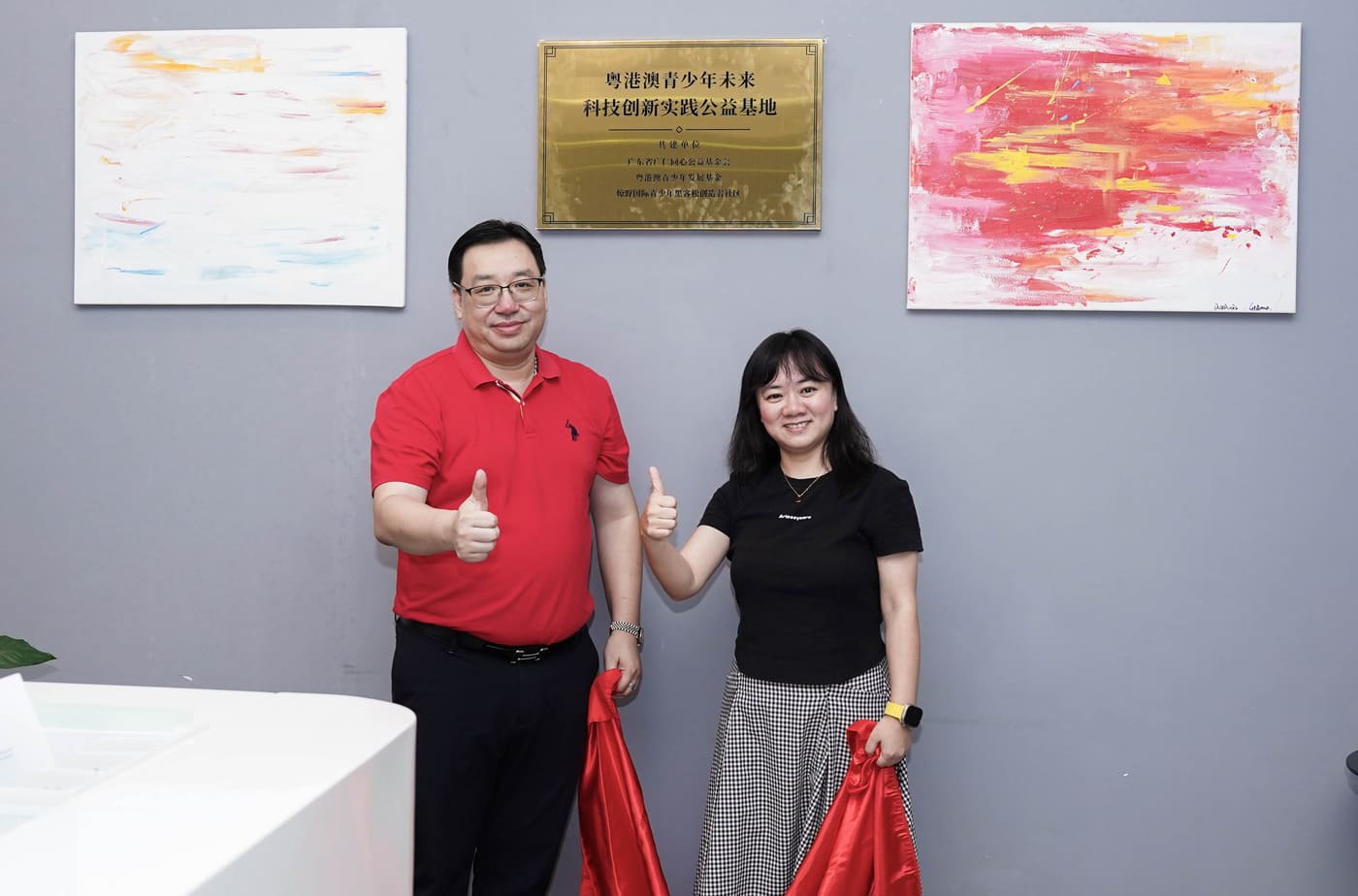
Greater Bay Area Youth Future Tech Innovation Practice Base
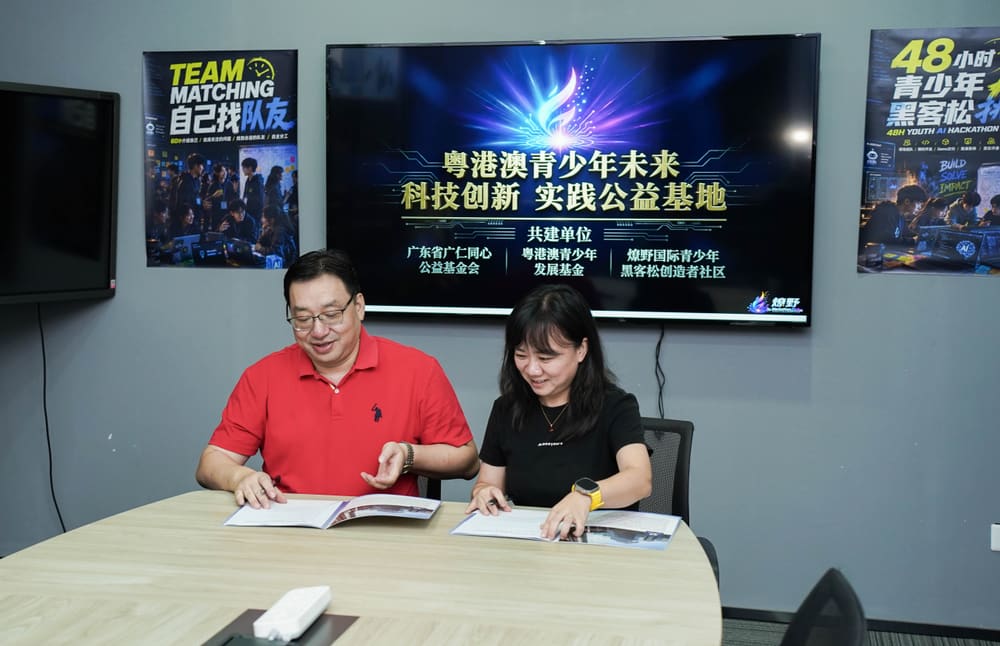
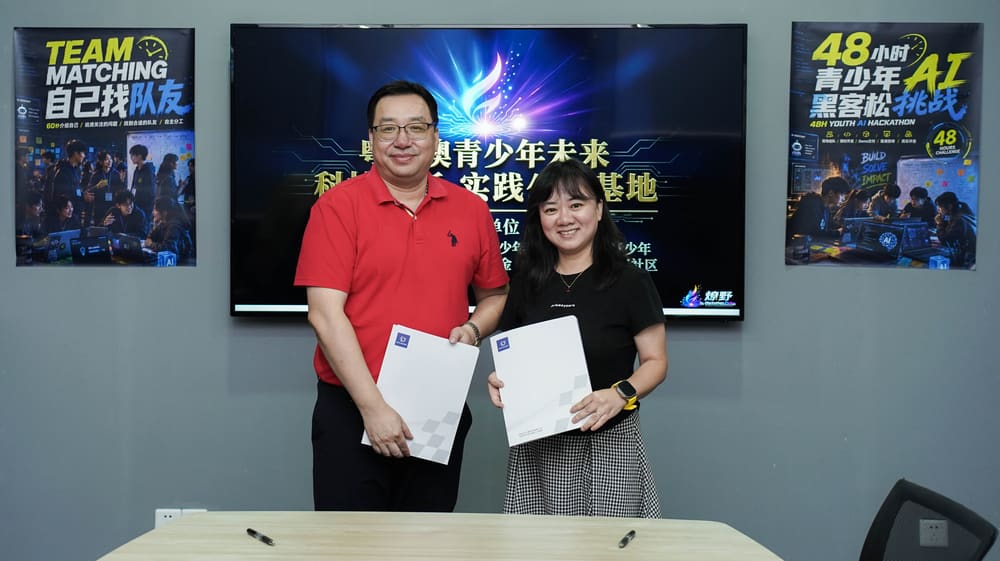
Co-founded by the Guangdong Guangren Tongxin Public Welfare Foundation, the Guangdong–Hong Kong–Macao Youth Development Fund and the Liaoye international youth hackathon creator community — the framework agreement is signed and the base officially unveiled.
Official supporting partners
 Guangdong–Hong Kong–Macao Economic and Cultural Exchange Center
 Guangdong Guangren Tongxin Public Welfare FoundationCharity partner
 Guangdong–Hong Kong–Macao Youth Development Fund
 Yee Cheung Industrial CommunityNational-level technology business incubator
Community & ecosystem partners
 Vibe CodersShenzhen's largest offline Vibe Coding community
 HackerTripOne-stop AI hackathon platform
 Aha!AI creative community
Charity places: set up with the Guangdong Guangren Tongxin Public Welfare Foundation and free for eligible youth from families in hardship.
Open the full note on the base and our partnersHow the base works, its six directions, who the communities are, and how charity places are granted
The base isn't a training classroom. It's a practice platform connecting young people, families, charities, developers, tech companies, founders, universities and industry — so kids move from “studying technology” to finding real problems, building projects with AI, testing them, presenting them and taking them into real-world settings.
Six directions
Community & ecosystem partners
AI communities and platforms we build with — connecting offline venues, events and creators.
Charity places · free for youth from families in need
As our charity partner, the Guangdong Guangren Tongxin Charity Foundation supports charity places that open the camp free of charge to eligible youth from families in difficulty, and oversees whether the programme stays true to its youth-growth purpose.
Key info
/ 07
Key information
ONLINE · 1 DAY · 8 HOURS
Cannot make the two days on-site?
One-Day AI Build Consulting & Co-Creation, online: eight hands-on hours from shaping the need to a finished result, with an AI app, a personal page, AI Skills and a 90-second demo built on the day. Parents can book the adult track and solve a real problem from their own work.
Service fee CNY 999 per person · per session · online
An entry service delivered as one engagement, not a replacement for the two offline days; if you can be there in person, start with IGNITE 48.
Put your child in a real creators' arena
After 48 hours your child leaves with something they actually built, and with the experience of being questioned seriously on stage. Each stop runs as a small group and closes when full — register online, and our advisor will confirm the seat and payment with you on WeChat.